Pasture & animal health
Plants poisonous to alpacas: what every keeper should know
Timm Quandt8 min read
Alpacas are generally very picky eaters — most of them recognize poisonous plants instinctively and avoid them. Even so, poisonings happen every year, above all in spring, when fresh green growth is tempting and natural caution gives way, or in hay, where dried poisonous plants can no longer be recognized. This article presents the most important plants poisonous to alpacas that grow on pastures, in hedges and in neighboring gardens across Germany, Austria and Switzerland — plants every alpaca keeper should be able to identify with confidence.
Why poisonings happen despite instinct
A healthy, well-fed alpaca with plenty of choice on the pasture won’t touch most poisonous plants. It gets critical in three situations. First, in spring, when cravings for anything green win out after a long time in the barn. Second, when feed is scarce — overgrazed ground or paddocks that are too small force the animals to eat things they would otherwise avoid. And third, in hay: dried plants lose their bitter taste and are barely recognizable in a bale, yet the toxins remain — in some plants even in concentrated form.
Then there is the long neck: alpacas can reach farther over the fence than many keepers realize. Garden and hedge plants beyond the paddock boundary are therefore part of the risk assessment.
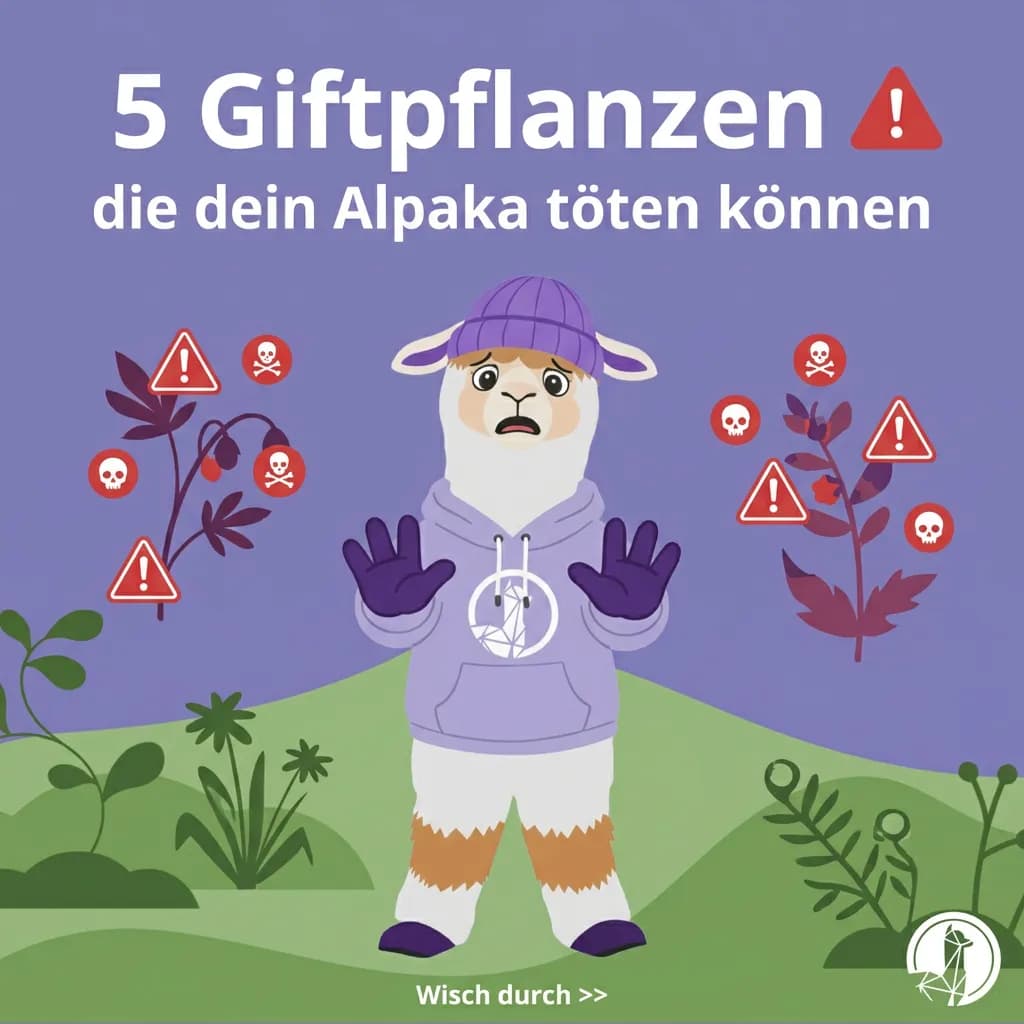
The five most important poisonous plants at a glance

1. Yew (Taxus baccata)
Yew is considered the most dangerous plant for almost all grazing animals. The active compound is the alkaloid taxine, found in needles, bark, wood and seeds — only the red flesh around the seed is harmless. Even a small amount of needles (a few grams) can kill an adult alpaca within minutes. The tricky part: yew is a very common hedge and cemetery plant, and its clippings easily end up over the fence or get dumped by neighbors as supposedly harmless green waste.
Symptoms often come on so suddenly that there is no chance to treat: weakness, trembling, collapse, cardiac arrest. There is no effective antidote. The most important prevention: no yews within reach of the animals — not even behind the fence.

2. Common ragwort (Senecio jacobaea)
Common ragwort, also called tansy ragwort, is one of the most dangerous meadow plants in Central Europe. The pyrrolizidine alkaloids it contains cause chronic, irreversible liver damage. Unlike with acute poisons, the effects often show up only months after ingestion — but then are frequently fatal, and by that point the original source of exposure can no longer be traced.
Alpacas usually avoid the fresh plant — its bitter taste warns them. Once dried, though, the herb loses this protective mechanism almost completely: in hay it is no longer recognized and gets eaten along with everything else. That makes the origin of your hay the decisive question. Hay meadows should be checked for infestations before every cut, and when buying hay it pays to ask specifically for ragwort-free meadows. On your own pasture, consistently digging the plants out before flowering (June to August) helps — mowing alone isn’t enough, because the plant resprouts.

3. Buttercup (Ranunculus species)
Buttercup species — best known are meadow buttercup and creeping buttercup — grow on almost every damp pasture. They contain protoanemonin, which irritates mucous membranes and causes stomach and bowel problems. Acute toxicity is much lower than with yew or autumn crocus, but with heavy infestation or a shortage of feed the animals can still be affected. In hay the plant becomes harmless: protoanemonin breaks down during drying.
Buttercup indicates over-fertilized or too-wet sites. If you want to get rid of it on your pasture, start with the site — that means improving drainage and balancing fertilization — rather than trying to remove the plants one by one.
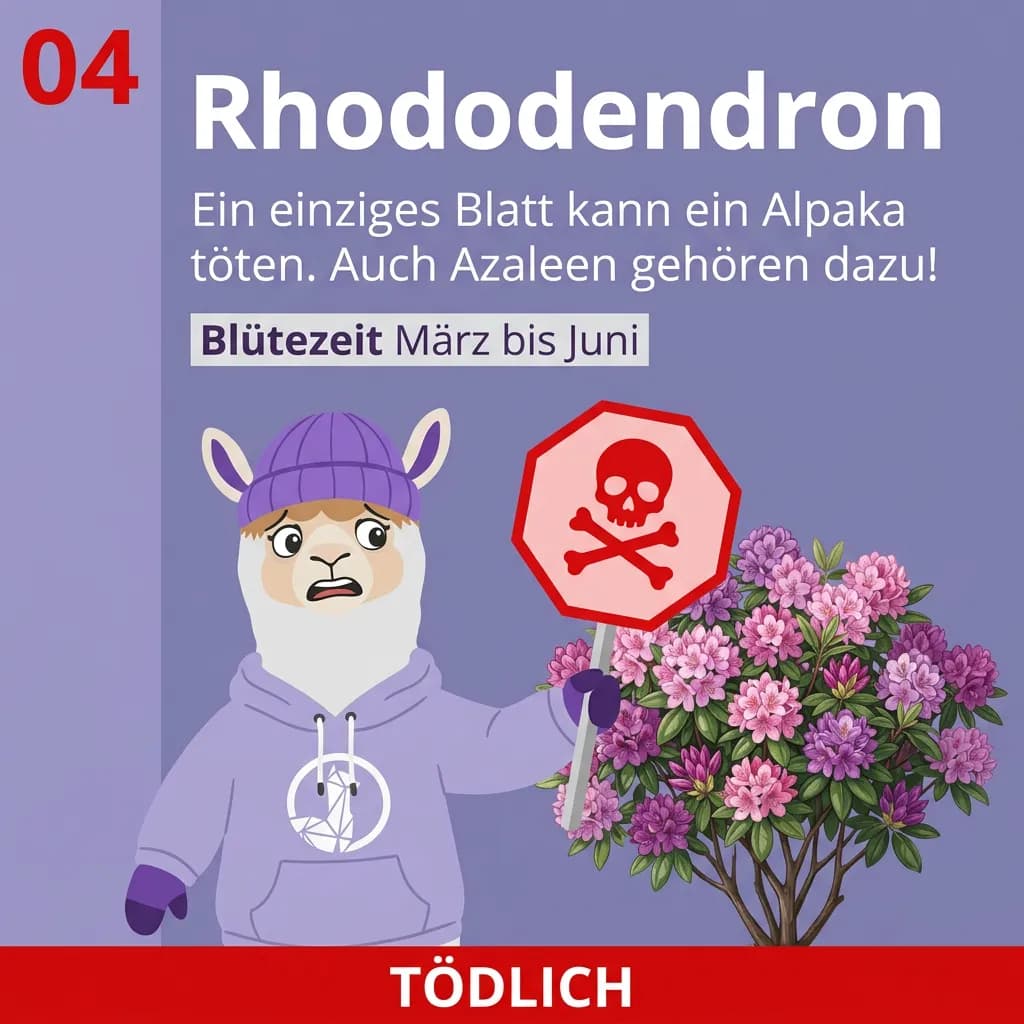
4. Rhododendron and azaleas
Rhododendrons and azaleas contain grayanotoxins, which attack the heart, circulatory system and nervous system. Eating just a few leaves can trigger severe symptoms: increased salivation, vomiting — rare in ruminants, and just as uncommon in alpacas — colic, trembling, weakness, breathing problems and cardiac arrhythmia.
The plant rarely grows on pastures themselves, but all the more often in neighboring gardens. Hedge clippings from the neighbor are a typical source of poisoning. Educating the neighborhood helps more here than any fence: if you keep alpacas, you should actively communicate that garden and hedge clippings must not be thrown over the fence.

5. Autumn crocus (Colchicum autumnale)
Autumn crocus contains the alkaloid colchicine, one of the strongest plant poisons there is — and there is no antidote. Like ragwort, autumn crocus is usually avoided by alpacas when fresh. In hay, however, it is hard to spot, and colchicine stays completely stable during drying.
Symptoms appear with a delay — usually 6 to 48 hours after ingestion: bloody diarrhea, salivation, weakness, circulatory failure. The course is often fatal. On infested meadows, the plants should be removed consistently before the hay harvest; simply not using hay from such meadows is the safest solution.
More plants to avoid at all costs
Besides the five plants presented, there are others that belong on every keeper’s checklist. Among ornamental and hedge plants, these are mainly oleander, laburnum, cherry laurel, thuja, arborvitae, monkshood and spindle — many of these plants are acutely deadly in amounts as small as a few leaves. From native flora, add bracken, black locust, alder buckthorn, bittersweet nightshade and hemlock, plus bitter almond, thorn apple and white hellebore among garden and potted plants.
Acorns and oak leaves are also problematic in larger amounts — the tannins they contain damage the kidneys and the stomach and bowel. Young animals react more sensitively than adults.
Symptoms of poisoning
Symptoms of poisoning vary widely depending on the plant, but a few signs should always make you sit up: increased salivation and chewing motions, sudden apathy and loss of appetite, colic symptoms (lying down and getting up often, stretching), diarrhea — especially bloody — trembling, convulsions, a staggering gait, difficulty breathing or an elevated heart rate. With acute poisoning, sudden death without any visible warning can also occur — typical of yew, for example.
Prevention: what works in everyday keeping
The most important measure is a thorough walk through all paddocks once a year — ideally in late spring, when most plants can be identified. Assess the fence line from both sides: what grows inside, and what reaches in from outside. Know your hay sources; when buying, ask directly about ragwort and autumn crocus, ideally walking the hay meadow before the cut.
Pasture management plays an indirect but important role: a large enough area with good growth reduces the risk considerably, because the animals don’t turn to poisonous plants out of hunger. Rotation and overseeding help keep the ratio of forage to poisonous plants favorable.
Finally, educating the neighborhood is a must: garden and hedge clippings are the most common avoidable cause of poisoning. A friendly conversation at the start of keeping alpacas prevents most incidents.
Sources and further reading
A complete overview of all relevant plants is offered by specialist literature, such as the book “Alpakas und Lamas — Giftpflanzen, die Neuweltkameliden nicht fressen dürfen” (Lama-Nativo Verlag). Online, the databases of Botanikus.de and the Global Toxic Plant Database of the Open Sanctuary Project are helpful. Regional plant populations differ considerably, though — no list can replace an expert walk through your own pasture.
Sources
- Bertram et al. (2024) — Fallbericht: Rhododendron-Vergiftung bei vier Alpakas in Norddeutschland
- Merck Veterinary Manual — Jakobskreuzkraut/Senecio und weitere für Neuweltkameliden giftige Pflanzen
- Rocky Mountain Llama & Alpaca Association (RMLA): „Plants Poisonous to Alpacas and Llamas" — Eibe (Taxus) und Giftpflanzenübersicht
- Cornell University / Colorado State University — Toxizität welker Rotahorn-Blätter (Acer rubrum)