Husbandry & animal health
Shearing alpacas: the guide to timing, process and aftercare
Timm Quandt8 min read
Shearing alpacas does more than yield valuable fiber. Above all, it keeps the animals from heading into the warm season with a dense fleece. For the appointment to go calmly, safely and with the cleanest possible wool, you need more than clippers: the right timing, dry animals, a prepared work area and a well-rehearsed team. This guide walks you step by step through planning, shearing day and aftercare.
Why alpacas are sheared every year
An alpaca’s fleece grows continuously and insulates very well. In winter that is desirable, but in summer the same insulation can become a burden. Unlike a dog, an alpaca does not lose its fleece in a seasonal molt. Regular shearing is therefore a fixed part of health care and not purely an economic fiber harvest.
The British Alpaca Society generally recommends annual shearing. The New Zealand animal welfare code for llamas and alpacas also names regular shearing as a necessary measure so that animals do not suffer under excess fleece. Exceptions and the exact cut should be agreed with an experienced shearer or with a veterinarian, for example for sick, very old or severely underweight animals.
The right timing: before the summer heat
In central Europe, the usual period is spring to early summer. What matters is less a single calendar day than the weather window: the big heat should still be ahead of the animals, while freshly shorn alpacas need protection from cold, wind and persistent rain. If you shear very late in the year, you also risk that not enough fleece has regrown by winter.
The fleece must be dry on shearing day. Damp fiber is harder to cut and store; packed airtight, it risks odor, discoloration and mold. If rain is forecast, the animals should therefore be brought into a dry, well-ventilated area in good time. It is best to agree on a weatherproof backup date when booking.
Checklist: what should be ready before shearing
| Area | Preparation |
|---|---|
| Animals | dry, calmly pre-sorted and reachable without unnecessarily long waiting times |
| Work area | level, clean, non-slip, dry, well lit and with a power outlet |
| Materials | labeled bags, tarp or sorting table, broom, first-aid supplies |
| Team | experienced shearer plus enough helpers for animals, fleece and documentation |
| Aftercare | area protected from wind and rain for cool or wet weather |
Head halters, driving routes and the sequence should be known before the appointment. Hectic catching right before shearing raises stress for animals and team. If you are shearing for the first time, don’t practice on your own animal; book an experienced professional and first get to know the process as a helper.
How a professional alpaca shearing works
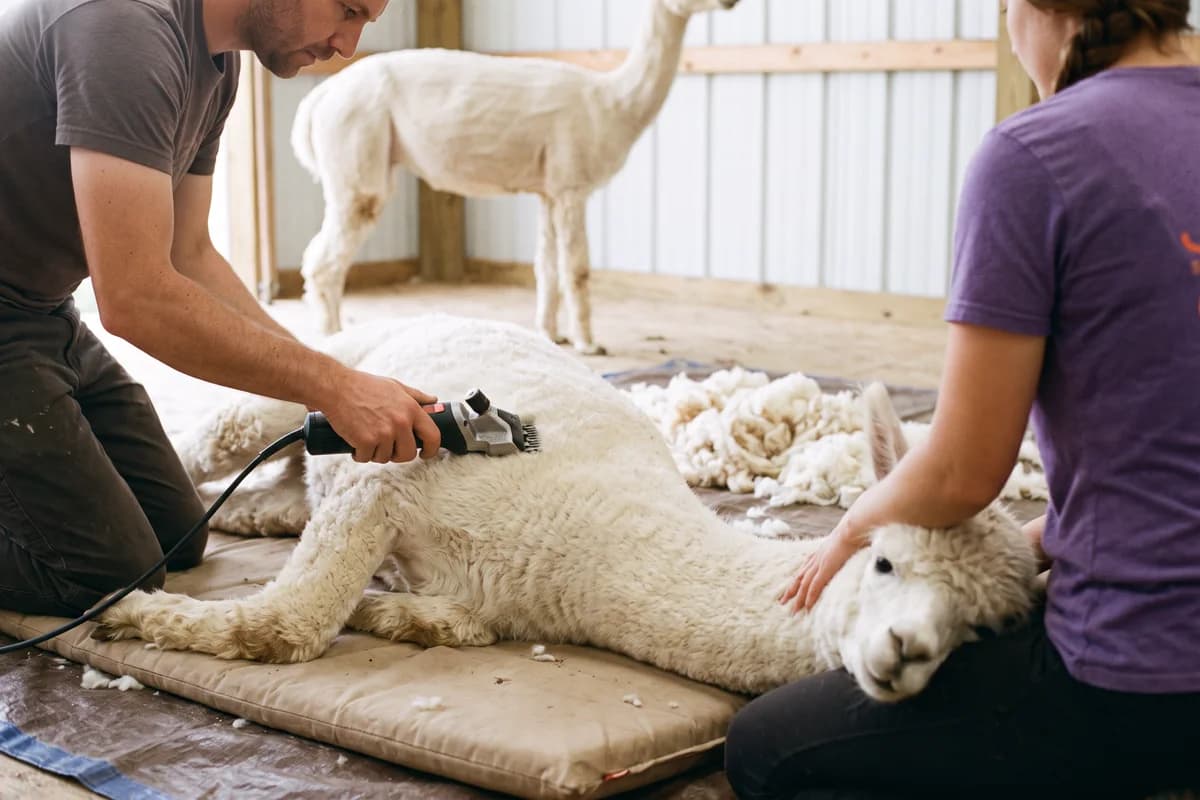
Many alpacas are brought into a controlled position on their side for shearing and secured so that they cannot suddenly get up. That looks unfamiliar to outsiders, but when done properly it prevents uncontrolled movements around the sharp shearing blades. Head, neck and limbs have to be guided calmly and without unnecessary pressure. The restraint lasts only as long as necessary.
First, the high-quality fleece is usually taken off the torso in sections that stay as connected as possible. Then come neck, chest, belly and legs. An experienced shearer works quickly, checks the skin folds and holds the machine flat. Small cuts can occur despite care; they must be treated immediately, documented and checked over the following days.
Sort the fleece right away instead of putting everything in one bag
The so-called blanket from the torso is usually the most even and finest part. Neck and leg fibers are often shorter or coarser and are collected separately. If you sort these grades into labeled, breathable bags during shearing, you save a lot of work later and prevent coarse fibers, dirt or plant matter from contaminating the best fleece.
Before storage, the fleece is spread out on a clean surface and roughly cleared of heavily soiled edges and foreign material. It must be completely dry. Which part of the fiber suits which kind of processing depends on fineness, length and evenness, among other things. More on this can be found in the article Alpaca Wool: Properties and Quality Features.
Shearing day is also a health check
Under a dense fleece, weight loss, skin changes and parasites stay hidden for a long time. Right after shearing, body condition, skin, ears and limbs are much easier to assess. Many farms also use the appointment to have toenails and, if needed, teeth checked by a qualified person.
Findings belong on more than a slip of paper next to the wool bags. Body condition, weight, skin findings, injuries and care measures carried out should be documented for each animal. That turns the annual appointment into a comparable health series instead of a snapshot.
After shearing: keep an eye on weather and wounds
Freshly shorn alpacas lose their weather protection abruptly. In cold wind or lasting rain they need a dry shelter; weakened, old or very lean animals deserve special attention. In sun, shade must still be available, because the skin is now exposed to UV radiation to an unaccustomed degree.
Check all animals on the same day and the day after: do they eat and move normally? Are there small cuts, swellings or chafed spots? If you have doubts about the general condition or a wound, the animal belongs in veterinary hands. A good shearing is not over until the herd is standing calmly again and every animal has been rechecked.
Sources and context
The advice is based on the shearing guide of the British Alpaca Society and the Code of Welfare: Llamas and Alpacas of the New Zealand Ministry for Primary Industries. Both sources describe general animal welfare standards; regional weather, health status and farm conditions must also be taken into account when planning the appointment.
Cover image: generated with Gemini 3 Pro Image for this article.
Frequently asked questions
How often does an alpaca have to be sheared?
Alpacas are generally sheared once a year. Their fleece grows continuously and is not shed in a seasonal molt. Regular shearing keeps the dense fiber from causing heat stress in the warm season.
When is the best time to shear alpacas?
In central Europe usually from spring to early summer: before the big summer heat, but in a way that freshly shorn animals don’t end up unprotected in a longer cold and wet spell. The actual weather window matters more than a particular month.
Can you shear an alpaca in the rain?
The fleece should be completely dry at shearing. Damp fiber is harder to cut and store and can felt, smell or mold. If it rains, the animals have to be housed dry in good time or the appointment postponed.
Why are alpacas laid down for shearing?
Many alpacas are sheared in a controlled position on their side. With proper restraint, this prevents sudden movements around the sharp shearing blades and allows a quick, even cut. The restraint should be calm and last only as long as necessary.
What should you keep in mind after shearing alpacas?
Freshly shorn animals need a dry shelter in cold wind and rain and continued shade in the sun. Small cuts, behavior and feed intake should be checked on shearing day and the day after.