Fiber & care
How to wash alpaca wool and care for alpaca products: washing, drying, storing
Timm Quandt7 min read
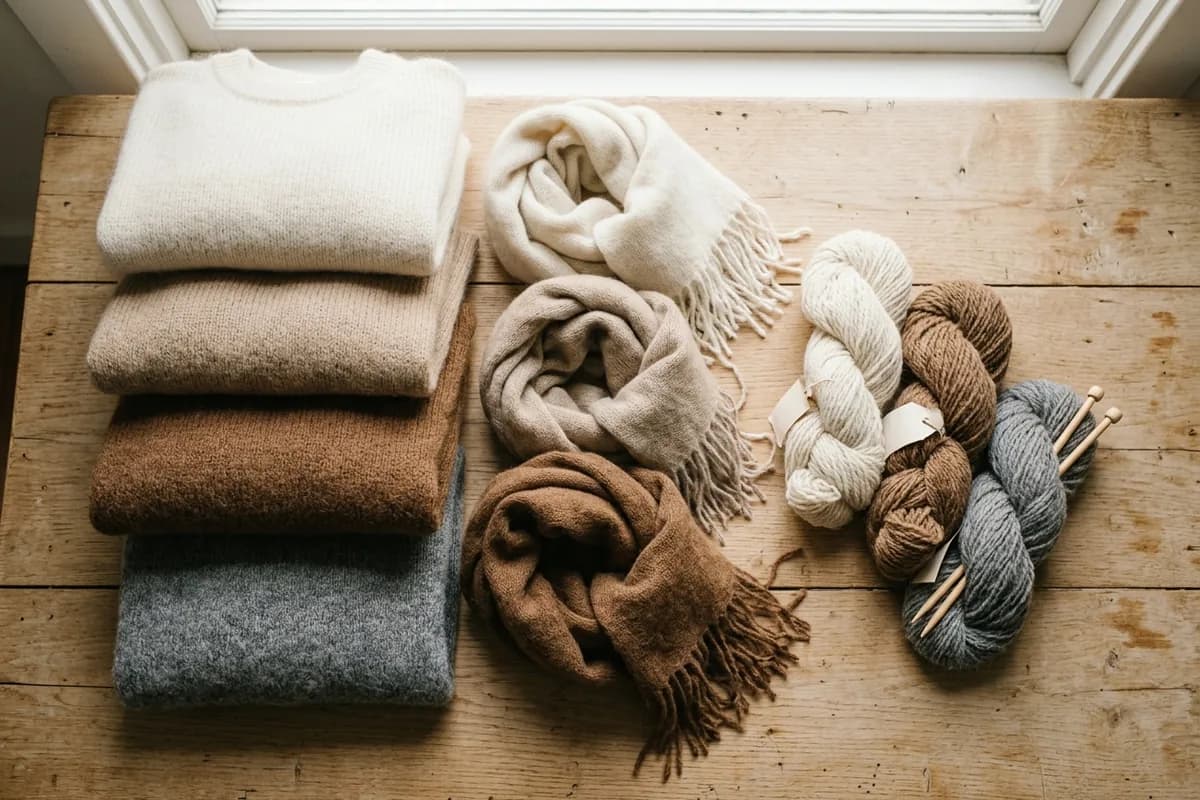
A sweater made of pure alpaca feels wonderfully soft in the store. After a few months of wear, many pieces sit noticeably looser than on the first day. That is not a sign of poor workmanship but comes down to the fiber itself. If you understand why alpaca “grows” and why it is so often blended, you will know how to wash alpaca wool, dry it and store it, and you will shop more deliberately next time.
Why alpaca sweaters stretch out
The reason lies in the fiber structure. Alpaca fiber has hardly any crimp, that is only a few of the fine waves that give sheep’s wool part of its spring. On top of that comes a second point: once stretched, pure alpaca fiber does not spring back. Experts speak of a lack of resilience, “memory” for short. A knitted piece made of 100 percent alpaca therefore literally wears itself out of shape: sleeves get longer, the neckline wider, the cuff looser, and it stays that way, it does not shrink back afterward.
That is exactly why alpaca ends up in many collections not pure but blended. Sheep’s wool brings back the elasticity that alpaca fiber lacks, and nylon adds shape retention. A blend is therefore not a sign of cutting corners but a deliberate decision by the makers.
What pure alpaca is really good for
Pure alpaca spins differently from sheep’s wool. Because the fiber has hardly any crimp and is also slipperier, it needs considerably more twist in spinning for the yarn to hold at all. That is why industrial processing is slower than with wool, too. The result is a heavy, flowing fabric with a beautiful drape. For scarves, ponchos and loose-hanging fabrics, that is ideal. For close-fitting, ribbed pieces, on the other hand, pure alpaca is less suitable, which is exactly where makers are most likely to reach for a blend.
When buying woven fabrics, it is also worth looking at the fleece type. Suri fibers are smooth, long and glossy, with a staple length of around 118 mm, almost twice as long as the far more common Huacaya at around 68 mm. This very length and smoothness makes Suri interesting for woven, flowing fabrics, while Huacaya is the usual basis for knitwear. More on fineness, microns and the differences between the two fleece types can be found in the article Alpaca Wool: Why the Fiber Is So Special.
Color: why it is often not dyed at all
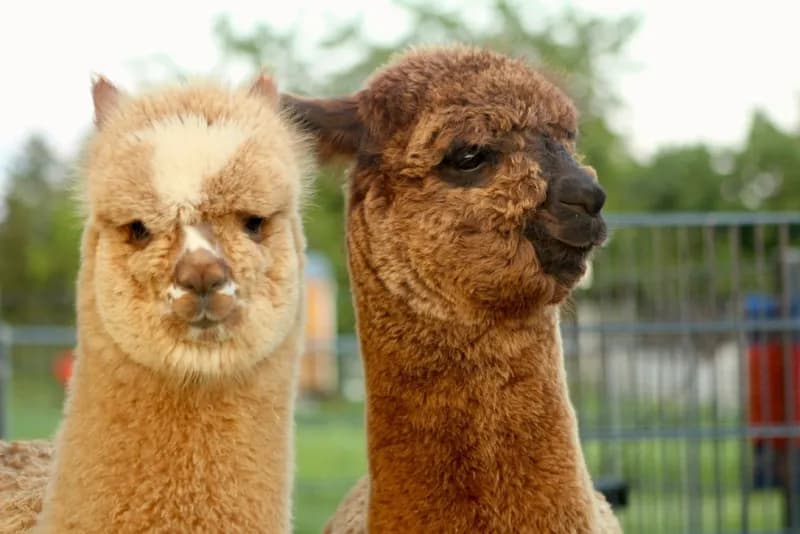
Alpaca comes in 22 natural colors recognized by the fiber market, from white through all shades of gray and brown to black. This palette makes dyeing simply unnecessary for many products. A piece in its natural color is therefore not a compromise but rather the less treated variant. If it is dyed after all, alpaca fiber takes the color well, because, unlike sheep’s wool, it lacks lanolin, the wool grease.
When buying: pure or blended?
A look at the label tells you a lot. If it says 100 percent alpaca, you get the purest form of the fiber: soft, warm, flowing in its drape, but without resilience. That suits scarves, wide sweaters and loose-hanging knitwear, where a bit more room over time is no problem. If it says a blend with sheep’s wool or nylon, that is not a compromise but a deliberate choice for pieces that have to hold their shape, such as close-fitting rib-knit sweaters or gloves. For woven, flowing fabrics, it is also worth looking for Suri fiber instead of knitwear made of Huacaya.
Washing: by hand, not in the machine
When it comes to care, there is a single but important rule: alpaca should be washed by hand, in cold to lukewarm water with a mild wool detergent, and without wringing. The combination of heat, water and friction irreversibly felts the scale layer of the fiber. A piece that has felted once cannot be rescued. A tumble dryer is therefore off limits as well.
| Step | How to do it |
|---|---|
| Washing | Hand wash, cold to lukewarm water, mild wool detergent, do not wring |
| Drying | Lying flat on a towel, no tumble dryer |
| Storing | Cool, dry, airy, no plastic bags, with cedar wood or lavender against moths |
| Dyeing | Mostly unnecessary, since 22 recognized natural colors are available |
Drying: lying flat, not hung up
After washing, dry flat and do not hang up. The reason is the same as for the stretching out: without resilience, the wet, heavier fabric stretches lengthwise under its own weight when it hangs, and keeps that shape permanently afterward. Spread out flat on a towel, the original fit is preserved.
Storing: keeping moths out
Like any protein fiber, alpaca is prone to moths. For storage between seasons, that means: cool, dry and breathable, no plastic bags. Moisture builds up inside them, and that is exactly what favors moth infestation. Cedar wood or lavender are considered proven moth protection for delicate natural fibers.
Pilling: why alpaca pills comparatively little
Good news for the look: alpaca pills comparatively little because the fiber surface is smooth. Where it does pill, short or loose fibers, friction and loosely spun yarn are usually the cause. A piece made of longer staples, such as baby alpaca, and of tightly processed yarn pills correspondingly less. When buying, you can test this roughly by rubbing the yarn briefly between your fingers.
In the end: compostable instead of trash
Alpaca is a 100 percent natural, biodegradable protein fiber and can be composted at the end of its useful life. No argument against a sensible wool or nylon blend, but a point that can count when deciding between natural fiber and purely synthetic goods. If you want as little synthetic fiber as possible, you will find the more consistent choice in pure alpaca and knowingly accept the somewhat greater risk of stretching out.
Frequently asked questions
Can I wash an alpaca sweater in the washing machine?
Better not. Alpaca should be washed by hand, in cold to lukewarm water with a mild wool detergent, and without wringing. Heat, water and friction irreversibly felt the scale layer of the fiber, which is why a tumble dryer is off limits too.
Why does alpaca wool stretch out after wearing?
Because pure alpaca lacks the resilience that experts call “memory”: once stretched, the fiber no longer springs back. Knitwear made of 100 percent alpaca therefore gets looser over time and visibly grows. That is exactly why alpaca is often blended with sheep’s wool or nylon.
Why is alpaca wool blended with sheep’s wool or nylon?
Sheep’s wool brings back the elasticity that pure alpaca lacks because it has barely any crimp and no resilience. Nylon also adds shape retention. A blend is therefore not a quality defect but a deliberate choice, especially for close-fitting, ribbed knitwear.
How do you dry alpaca sweaters properly?
Lying flat, not hung up. Because the fiber has no resilience, wet, heavier fabric stretches lengthwise under its own weight when hung and keeps that shape permanently. Spread out flat on a towel, the fit is preserved. A tumble dryer is unsuitable.
How do you store alpaca products so moths stay out?
Cool, dry and breathable, not in plastic bags, because moisture builds up inside them, which favors moths. Cedar wood or lavender are considered proven moth protection for the protein fiber.
Sources
- Fasereigenschaften und -wachstum bei Alpakas, Frontiers in Animal Science (2023)
- Rappersberger, „Lamas und Alpakas — Haltung, Zucht und Nutzungsformen“, 3. Auflage, Ulmer Verlag (2018), ISBN 978-3-8001-0768-1 — Faserverarbeitung und Produktpflege